Saturday, May 16, 2015

Week 7 - Neuroscience + Art

Saunders huffing lighter fluid (self-portrait) featured by Luxton
Truthfully, this week's material stumped me in a new way - Professor Vesna opened with consciousness, dreams, and the idea of mind control, but then jumped right into neuroscience and even psychology concepts of nervous systems and visual cognition and perception.  And all that talk of LSD and cocaine - did I miss some terribly important transition or what?

Yet, this often unspoken topic of illicit drugs and the direct effects it has on people's neurochemical pathways and creativity had the clearest connections.  Here, we see direct manipualations of the brain mechanisms and how it influences and shapes and inspires artist's works.  For example, Huxley was a pioneer of art inspired or under the influence of mescaline and created works regarding his experiences (Vesna).  His book thrived with these recollections and the aesthetics.
Saunders under influence of Xanax (self-portrait) featured by Luxton

Bryan Saunders, in a similar manner, directly shaped his art by trying various drugs and creating a self-portrait of himself following each consumption of drug (Luxton).  Though at the expense of his own body and with some effects of brain damage, he created numerous works (two featured to the right) that illustrated the drastic effects of drugs on oneself and how it alters one's perspective.

However, that raises another question of how much art has been created purely due to the consumption of such drugs.  Fields raises a question about musicians who admitted to using drugs while creating their art: "Was the music they produced using a pharmacological crutch worth the silence of music unborn, which will never be heard because of their premature death?"
Jamison suggests mania of mental illnesses drives art

This alludes to the art created by those who didn't take drugs, even for mental illnesses.  The mania driven in the neurochemistry produced art quite unseen.  Many talented writers throughout history were plagued by different disorders of the mind and often succumbed to unfortunate ends due to the lack of treatment.  Yet, leading up to this, the musicians, writers, painters, and such create beautiful works driven by the highs of their disorders or as coping mechanisms.

So, we see that "The creative work of an artist who overcomes their mental illness–often by turning to art and literature to help them cope–is an inspirational personal triumph. But the creative work of a person who induces mental imbalance pharmacologically is the product of a drug" (Fields).  Clearly, manipulations of neuroscience through drugs or alternate brain wirings as seen in mental disorders add more depth and perspective to art that otherwise would not so clearly defined and illustrated.  Do we judge differently based on how that art was created or the background pathway it took?

Works Cited

Anthony, Robert. "Artist Creates Self-Portraits On Different Drugs, And The Results Are Insane." Elite Daily.  31 Jan. 2014. Web. 15 May 2015.

Fields, Douglas. "Creativity, Madness and Drugs." Scientific American.  22 Nov. 2013. Web. 15 May 2015.

Luxton, Rebecca. "A Man Got High on 52 Different Drugs Then Drew These Trippy Self-Portraits." Ryot News + Action.  Ryot, 2014. Web. 15 May 2015.

"The Influence of Drugs in Art History." Huffington Post. 20 Apr. 2011.  Web. 15 May 2015.

Vesna, Victoria. "Neuroscience pt. 2." Online video clip. Youtube. Youtube, 29 Apr. 2012. Web. 14 May 2015.

Sunday, May 10, 2015

Week 6 - BioTech + Art

Stelarc's performance piece, Ping Body
Human creativity is what pushes our society forward, in terms of the beauty and technology that comes forth from the artists and scientists.  Although scientists are called the experimenters in labs and test trials, artists themselves also have the leeway to experiment with different techniques, much to some debate about controversial acts to humans and animals.  The question is, to what extent may artists push the boundaries, who don't already have ethical laws to follow?

Scientist Haldane self-experimenting in a deep-sea diving chamber
Stelarc, known for his attachment of a third ear on his arm,  formed the Ping Body project "in which he wired himself to the internet — quite literally — by attaching electrodes to various muscles, which could then be activated by remote users" (Dayal).  Stelarc's messages of global connections through the internet and the feelings of human connection through technological interfaces captures the fusion of biotech and art.  Because his experiments are on his own body and is supported by his own free will, I personally am hesitant to refer his work to some of the ethical dilemmas present in artists' manipulations of the body, genes, and animals.

What ethical implications exist for wearable technology?
However, scientists themselves have discussed an idea called "self-experimentation" (Carisa).   While more prevalent before the establishment of ethical review boards, scientists are limited based on a set of rules.  Often, they are not allowed to include themselves as subjects to their experiments, though there are many instances where the scientist, or performer, is placed within the experiment itself though it may devalue the data (Haris).

This does not take into consideration experiments and art forms that extend beyond just the artists' own life and body.  Miranda talks about works that carry "emotional reactions that biotechnology can inspire, especially in the wake of 9/11."  Considering how such art does not create quite as physical benefits that scientists generate for the medical or defense fields, it raises the questions of what can be done in respect to the life forms around us and the consequences they may carry.

Though there may not be answers now, these are all relevant questions that artists must consider before proceeding with their artist expression and manipulations of life.  Professor Vesna, through the varying examples that explore the many realms of ethicality and societal acceptance of art, hinted that such bioart must be taken beyond face value.  Society must also take a more active role in determining and pondering the ethical implications, even more so than they already do for scientists, of artists who challenge the norms and express themselves in biotechnological mechanisms.

Works Cited

Cunningham, Carisa. "Scientists discuss experiments on self." HARVARD GAZETTE ARCHIVES. Harvard University Gazette. Web. 9 May 2015.

Dayal, Greeta. "For Extreme Artist Stelarc, Body Mods Hint at Humans’ Possible Future." Wired. Wired, 2 May 2012. Web. 9 May 2015.

Haris, Eleanor. "Eight scientists who became their own guinea pigs." NewScientist, 11. Mar. 2009. Web. 9 May 2015.

Miranda, Carolina. "WEIRD SCIENCE: BIOTECHNOLOGY AS ART FORM." Art News, 18 Mar. 2013. Web. 9 May 2015.

Kershen, Drew. "The Concept Of Natural: Implications For Biotechnology Regulation." AgBioWorld. Web. 9 May 2015.

Saturday, April 25, 2015

Week 4 - MedTech + Art

The development of technological integration in medicine and health has been sensationalized with the works of Orlan and Caps, among other artists, but its effects often goes unspoken for how it has revolutionized patient care with incorporations of art and technology.  Professor Vesna shared the growth of biotechnology and the portrayals of it through body performance art, which truly shocked and surprised me.  I wanted to take a closer look to see how the medical technology first came out before it became portrayed as such a spectacle rather than as something respected.

Medicine now requires a scientific and artistic background
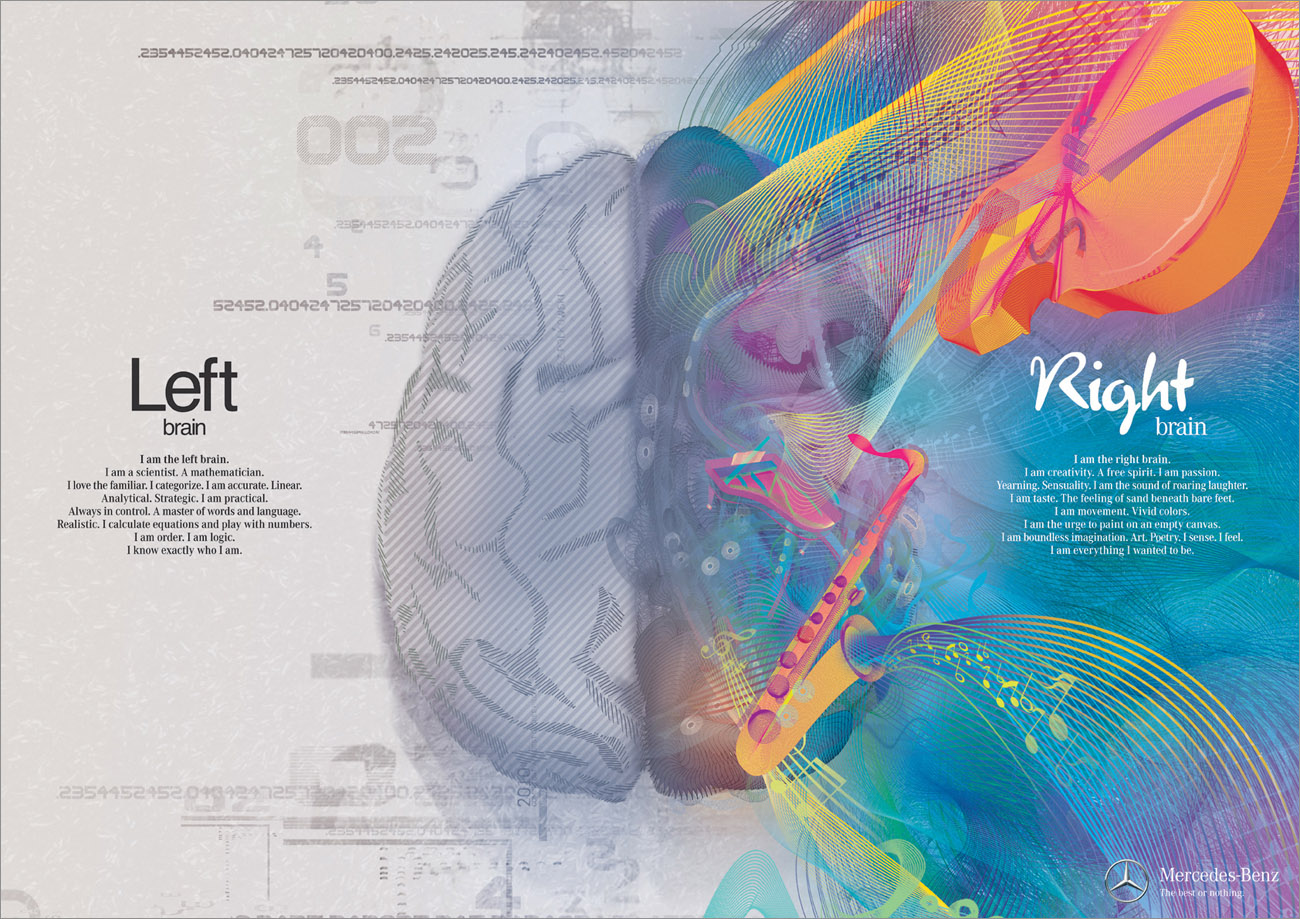
The emphasis on this incorporation of art into medical treatments and the technology utilized to provide cutting edge care is clear from how doctors are now being trained and selected.  After all, medical schools are "emphasizing more 'right brain' characteristics (including imagery, poetry and drawing) may actually hold greater value in the eyes of some experts" (Glatter).

The evolution of 3D printing is another example of how art has played its role in medical advancements.  Scientists have been able to engineer hearing aids, and with the help of the artists (or artistic left brains), they have been able to specialize them to each individual patient.  Even custom made casts can be created, and soon "we’ll be able to make organs from our own stem cells and replace them when needed, and all without the fear of rejection or lifelong dependence on harsh drugs" (Kotler).


Popular medical shows illustrate this evolution, including Grey's Anatomy, with 3D modeling and printing to help aid patients.  The video clip above represents both the spectacle and awe that may come with such advancement.
Brain scans reveal harsh realities and a beauty of biofeedback

Diane Gromola further highlights the unique way technology and art can really individualize treatment plans for patients, with computerized aids to help patients through biofeedback and meditation.  Brain scans are analyzed carefully for their effects, but the grand mechanism behind what they illustrate is beautiful all in itself.

Biotechnology has been often viewed in a scientific lens, but its value comes both from its emphasis on art and science.  The sensationalization of such advancements need not overshadow how modern machinery can change and improve medicine and the human body.


Works Cited

Glatter, Robert.  "Can Studying Art Help Medical Students Become Better Doctors?" Forbes.  20 Oct.  Web.  24 Apr. 2015.

"Grey's Anatomy SE10x08: Meredith's New Printer." Online video clip.  Youtube.  Youtube, 19 Jul. 2014.  Web.  23 Apr. 2015.

Gromola, Diane.  "TEDxAmericanRiviera - Diane Gromala - Curative Powers of Wet, Raw Beauty."   Online video clip.  Youtube.  Youtube, 07 Dec. 2011.  Web.  23 Apr. 2015.

Kotler, Steven.  "5 Medical Technologies Revolutionizing Healthcare." Forbes.  19 Dec. 2014.  Web.  24 Apr. 2015.

Vesna, Victoria.  "Medicine pt3."  Online video clip.  Youtube.  Youtube, 22 Apr. 2012.  Web.  24 Apr. 2015.


Sunday, April 19, 2015

Week 3 - Robotics + Art

Robots have emerged as a result of industrialization, both as a direct byproduct of an industrialized world and as an indirect result of the shift in culture that allows for and thrives upon these mechanical beings.

Professor Machiko Kusahara illustrated the cultural difference regarding robots, stating that western culture focuses more on the “evil” robots may become, while Japanese culture values such art form as a means of helping people.  This response to industrialization is interesting as we can discern the different perspectives in how it will lead us into the future.  The evil robots have emerged in varying artistic mediums and has become prevalent in our society through movies and books of robot take overs, yet robots as a means of serving society has prevailed in Japan and is making its way into the medical field.  

Robots help children cope with pain and doctor's visits
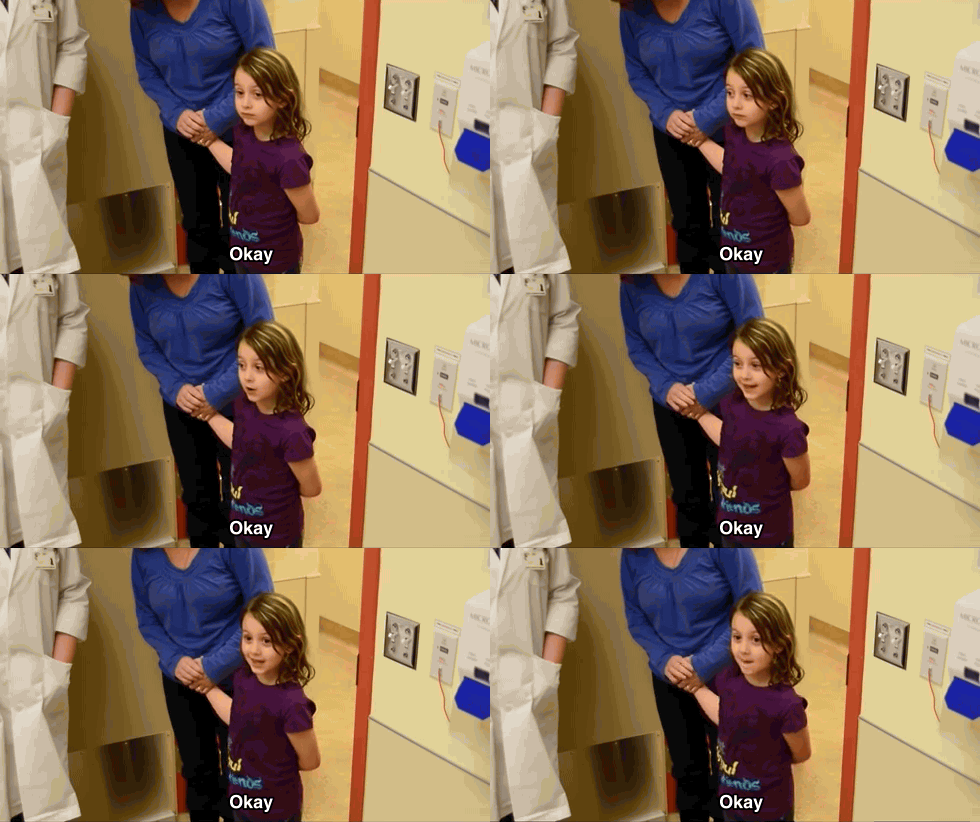
Utilizing different forms and artistic measures, robots are now being utilized to interact with children as a way to help with pain and stress coping.  Yam describes how the robots express emotions and personalize their communications with kids.  Clearly, if utilized and designed appropriately, robots and the art generated from their outputs can be used for good.  Through the design of the robots, these machines are made personable and friendly, depicting a level of humanness and emotion that is only made possible through careful composition and construction. 


Brooks describes how “having the idea that robots could really have emotions, or that robots could be living creatures” may be overwhelming, but unavoidable.  One shift we as a society must make is not to think of robots as the future of destruction and doom, but one with greater service and help.  Utilizing art in the creation of these robots, with careful aims and goals, can really help avoid the dramatic scenarios created by the technological culture today. 

Wall-e and Eve, depicting sentience
However, following the release of Disney Pixar’s Wall-e, the discussion of technology and robotic control has escalated beyond that of Frankenstein monsters or medical helpers to that of how robots also take away humanity's need to put effort into relationships.  The art of communication is removed with the use of robots in many scenarios, as critiqued in Robo-everything, a follow up feature to Wall-e.


Society initially responded with mass production efforts, but now with increasing technology and application of art, these robot forms are advancing to much more than production line helpers but helpers for people's needs.  Understanding that robots may influence the value of relationships will allow the development to take into consideration this flaw.

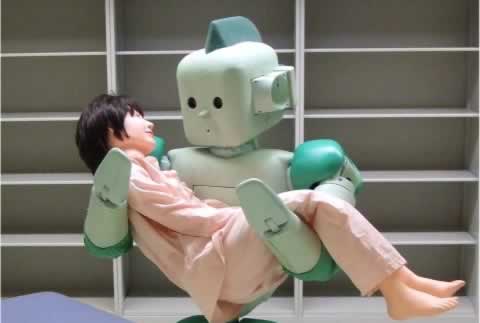
Robots in a more human form

Works Cited

Animation Sound Design: Building Worlds From The Sound Up featurette, 2008 DVD featurette, Walt Disney Studios Home Entertainment.

Brooks, Rodney.  “Robots will invade our lives.”  Online video clip.  Ted.   Ted, Sep. 2008.  Web. 17. Apr. 2015.

Robo-everything, 2008 DVD featurette, Walt Disney Studios Home Entertainment.

Uconlineprogram.  “Robotics MachikoKusahara 1.”  Online video clip.  Youtube.  Youtube, 14. Apr. 2012.  Web.  18. Apr. 2015.


Yam, Kimberly.  “Cheery Robot Helps Kids Cope With Pain During Hospital Procedures.”  The Huffington Post, 14. Apr. 2015.  Web.  17. Apr. 2015.


Sunday, April 12, 2015

Week 2 - Math + Art

Rule of thirds for visual composition

The rule of thirds for use in taking photos and creating canvas artwork was the extent of my knowledge and application of math in art.  Learning that the greatest art masters, from Francesca to da Vinci, not only created eternal art pieces, but also helped develop some of the scientific and mathematical processes for more realistic pieces made me appreciate more some of the techniques we use that we otherwise just take for granted.  Someone at some point in time had to come across the idea and really expand upon it before it became common knowledge. 
Vanishing point as demonstrated by Brunelleschi

Development of art in terms of math can be traced throughout history.  It never dawned on me the significance of geometry in perspective, as demonstrated by Brunelleschi in his use of the single vanishing point as described in lecture.  These principles, which we spent a year in middle school drilling in our minds, had significance beyond just the math lesson to the creation of art pieces.

The golden rectangle is another example of mathematical application in art.  Numerous works, including the Mona Lisa and pyramids of Egypt, utilize math relationships to create distinct but appealing figures.  Without the math portion, there would be much less visual appeal, but without the art, there would not be the beauty and uniqueness to each artists’ work.

Golden rectangle, even in today's society 
In modern works, the golden rectangle plays a huge part in the logos of popular brands.  Math plays a role in the creativity, but also the marketability of products and services.  The juxtaposition of math and art truly comes down to the design – how both math and art are needed to create designs that capture people’s attention and generates feelings of some sort.  Math influences and dictates the artwork in a way that allows artists to follow patterns to encourage viewers engagement, yet leaves them the leeway to generate new pieces each time. 

Usage of math provides a pathway for realism in some mediums, but also a creative, visually appealing and engaging art piece in modern forms.    

Works Cited

“Linear Perspective: Brunelleschi's Experiment.” Saylor. Smart History, n.d. Web. 11 Apr. 2015.

Meisner, G. “Logo Design using the Golden Ratio.” Golden number, 6 May 2015. 11 Apr. 2015.

Parveen, N. “Mathematics and Art.” N.p, n.d. 11 Apr. 2015.

“Rule of Thirds – Composition in Art.” The art and fine art tips of Lori Mcnee. N.p, n.d. Web. 11 Apr. 2015.

Vesna, Victoria. "Mathematics-pt1-ZeroPerspectiveGoldenMean.mov." YouTube.